Achilles Tendinitis Treatment Wellington, Florida Palm Beach Regenerative Orthopedics

Achilles tendinitis treatment wellington florida

If pain and stiffness are building along the back of your ankle, it makes sense to start searching for achilles tendinitis treatment wellington, florida palm beach regenerative orthopedics. Achilles tendon pain can make walking, running, stairs, and even the first few steps in the morning feel irritatingly hard. Some people notice it after increasing workouts too quickly. Others feel it after a change in shoes, tighter calves, or repeated strain that never fully settled down. Call now or schedule an evaluation if Achilles pain is starting to change the way you walk, train, or recover.

At Palm Beach Regenerative Orthopedics, the goal is to help patients in Wellington understand what may be irritating the Achilles tendon and what treatment path fits the real problem. Achilles tendinitis is common, especially in active adults, but it can also affect people who are not training for a race at all. A good plan starts with identifying how symptoms behave, how long they have been present, and whether the tendon is more likely dealing with overload, degeneration, heel irritation, or a combination of those issues. 

Orthopedic Care for Achilles Tendon Pain in Wellington, Florida

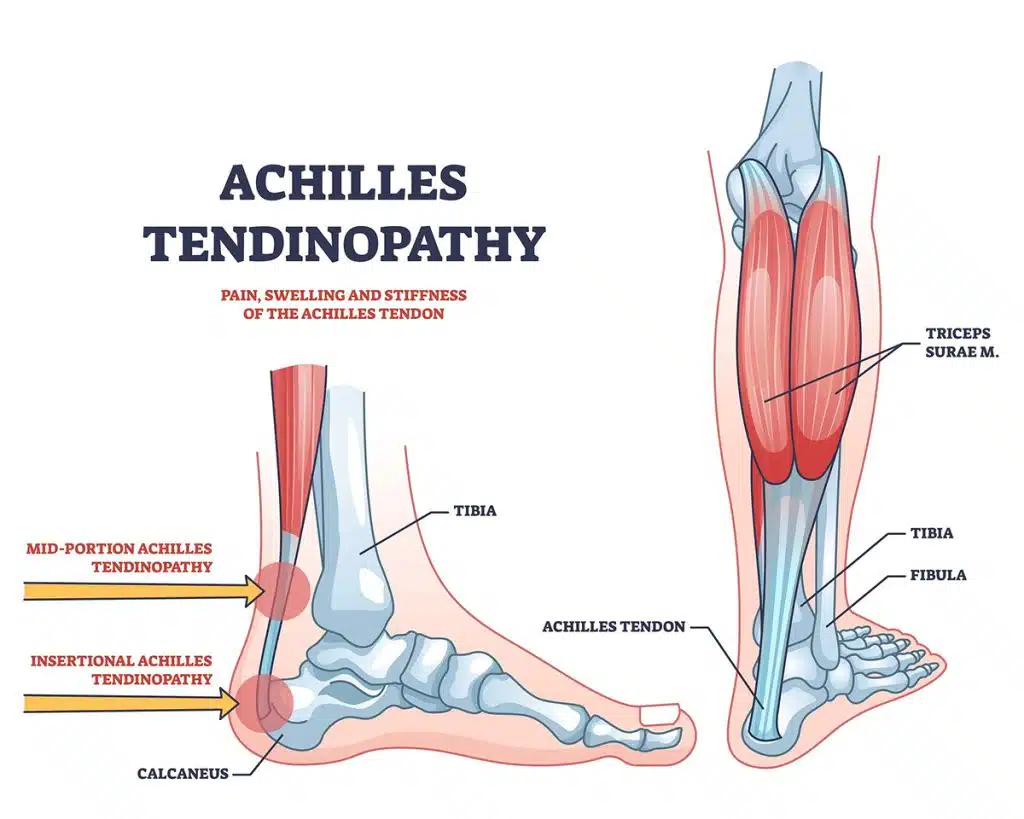
The Achilles tendon is the large tendon that connects the calf muscles to the heel bone. AAOS notes that it is the largest tendon in the body and handles major stress during walking, running, climbing stairs, jumping, and pushing up onto the toes. Even though it is built to take load, it is still vulnerable to irritation when stress rises faster than the tissue can adapt.

AAOS also explains that Achilles tendinitis and Achilles tendinopathy are often used to describe the same broader problem. Some cases involve acute inflammation. Others involve microscopic wear and chronic tendon degeneration that develop over time. That distinction matters because not every patient is dealing with one sudden event. Many are dealing with repeated overload that slowly becomes impossible to ignore.

In Wellington, this can show up in runners, tennis and pickleball players, golfers who walk courses regularly, fitness-class regulars, equestrians, and adults who simply spend long hours on their feet. Some feel pain in the middle of the tendon. Others feel it lower down where the tendon inserts into the heel.

Common symptoms that should not be ignored

Achilles tendon problems often start subtly. A person may feel tightness during the first few minutes of movement and assume it will pass. Then the area becomes sore after exercise, stiff in the morning, or tender enough that certain shoes become uncomfortable.

According to AAOS, common symptoms may include:

  • pain and stiffness along the Achilles tendon in the morning
  • pain along the tendon or back of the heel that worsens with activity
  • severe pain the day after exercising
  • thickening of the tendon
  • swelling that stays present or worsens through the day
  • pain on the back of the heel when wearing shoes
  • bone spur formation in insertional cases

These symptoms do not automatically mean surgery is coming. They do mean the tendon deserves attention before irritation turns into a longer cycle of pain, reduced performance, and compensation.

Why Achilles pain keeps coming back

One of the most frustrating parts of Achilles problems is that symptoms often improve just enough to trick someone into returning too quickly. Pain settles, activity resumes, then the stiffness and soreness come right back.

AAOS points to several common contributors, including a sudden increase in exercise volume or intensity, changes in footwear, tight calf muscles, and Haglund’s deformity, which can increase irritation near the back of the heel. The common pattern is overload. The tendon is asked to do more than it is ready for, or it keeps getting compressed and irritated without enough time or support to recover.

This is why short-term rest alone is rarely the whole answer. The tendon may calm down temporarily, but if calf tightness, training errors, poor shoe choices, or insertional pressure are still present, symptoms often return.

What an orthopedic evaluation is looking for

A useful evaluation for Achilles pain is not just about confirming that the tendon hurts. It is about figuring out where the irritation is, how severe it may be, and what factors are keeping it active.

AAOS notes that the exam may look for:

  • swelling along the Achilles tendon or at the back of the heel
  • bone spurs or pain near the lower part of the tendon in insertional cases
  • pain in the middle portion of the tendon in noninsertional cases
  • heel pain when stretching the calf
  • limited ankle motion, especially difficulty pointing the toes downward

The story matters too. Did symptoms start after a jump in mileage or a return to workouts? Is pain worst first thing in the morning, during activity, or the day after? Is the main issue running performance, daily walking, stairs, or standing at work? These details help guide treatment decisions instead of treating every sore Achilles exactly the same way.

When imaging matters

Imaging is not always the first step, but it can be useful when the diagnosis is unclear, symptoms are severe, or a procedure is being considered. AAOS explains that X-rays may show heel bone spurs or calcification in the tendon, especially in more advanced or insertional cases.

MRI is often used when surgery is being considered because it can show the severity of tendon damage more clearly. Ultrasound may also be used and can sometimes be done quickly in an office setting, though AAOS notes that results can depend heavily on the skill of the person performing the scan.

For many patients, the real value of imaging is not simply taking a picture. It is clarifying whether the issue is mainly overload, insertional irritation, significant tendon degeneration, or another foot and ankle problem that may be mimicking Achilles pain.

Non-surgical achilles tendinitis treatment in Wellington FL

AAOS emphasizes that most cases of Achilles tendinitis improve with non-surgical treatment, although improvement can take time and often lasts longer than people expect. Early frustration is common because the tendon may still hurt for weeks or even months while it calms down and rebuilds tolerance.

Non-surgical treatment may include:

  • relative rest from the activities that make symptoms worse
  • ice for the most painful area of the tendon
  • short-term guidance on anti-inflammatory medication when appropriate
  • shoewear changes to reduce tendon irritation
  • heel lifts or orthotics in selected cases
  • temporary bracing or boot support in more painful flares
  • physical therapy focused on flexibility and tendon loading
  • activity modification with lower-impact exercise during recovery

For many patients, the best plan is not complete inactivity. It is controlled load management. That means backing down from the exact activity that keeps flaring the tendon while maintaining movement in safer ways.

Patricia Y. profile picture
Patricia Y.
20:07 07 Sep 24
I saw Dr Al-Rashid for a painful hip in 2023. I was at a point where I had to use my hands to “lift” my leg into the car because the pain was too intense to just lift it on its own. He said that I was a candidate for PRP (platelet rich plasma) injections because I still have cartilage. Although they are not (yet) covered by insurance, it was an investment in my comfort that I am very happy with. It has been over a year, I have no pain whatsoever and can carry out my normal routine, and increased my exercise. I highly recommend Dr Al-Rashid and the Atlantis Orthopedic Group in Palm Beach Gardens.
Susan K. profile picture
Susan K.
23:50 24 Aug 24
Wonderful caring doctor.Effecient and kind staff
Jeff L. profile picture
Jeff L.
13:31 21 Jun 24
My medical experience with Dr. AlRashid and his staff was sensational during my two total hip replacement surgeries. Their treatment and care is top-notch and I would highly recommend them for anyone who is looking for a professional and caring Orthopedics service!
miken profile picture
miken
22:00 04 Apr 24
Always outstanding! He did my wife’s hip a little over a year ago and the follow up was great. I need two knee replacements and went to him to look at them. I will start with the first one end of this month. The staff follow through as been excellent. The best news is he does surgery at Palms West Hospital.
Md R. profile picture
Md R.
16:22 29 Feb 24
I recently had the pleasure of being under the care of Dr. Al Rashid, and I can confidently say that my experience was nothing short of excellent. From the moment I walked into his office, I was greeted warmly by the staff, and the efficiency of the administrative process was impressive. Dr Al Rashid took time to listen attentively to my concerns and thoroughly explained the treatment options available to me. His dedication to providing personalized care was evident in every interaction I had with him. I wholeheartedly recommend Dr. Al Rashid to anyone in need of a skilled and compassionate Knee specialist.
Rodney E. profile picture
Rodney E.
09:22 22 Feb 24
My first time to the office all staff were professional and nice, showed me that they really cared about me. Dr. Alrashid really impressed me after doing research on him he demonstrated professionalism, skill and knowledge just from our first meeting. I feel confident he will get me back to where I need to be.
Aiden profile picture
Aiden
17:25 16 Nov 23
I had my right hip replaced by Dr. Rashid and he was excellent. The operation went smoothly. I didn't even feel the prosthetic when I woke up from surgery.

Before all of this he was very careful and helpful, explaining everything in detail from beginning to end, even tried a few treatments before jumping into an operation.

(injections/pills/scans etc)

He explained the pros and con very well. His staff is excellent in the Loxahatchee and Lake Worth office. I'm very happy I found him. My leg feels superior than my normal leg and it's only been three weeks. The incision was tiny, and after seeing him three weeks after the operation (today), the prosthetic is perfectly in place. I barely have any pain other than wound aches from the muscle incision, which of course is healing every single day.

I no longer feel any electrical surges on my leg, spasms, or the leg not waking up when I'm in a sitting position or sleeping. Literally feels perfect. I have nothing negative to say, would definitely recommend him to everybody. I like the fact that he was very detailed with everything from beginning to end.

He takes his job very seriously well being relatable and is not the type of doctor that jumps into an instant operation, unless absolutely needed, which is positive.

Why calf flexibility and eccentric loading matter

AAOS specifically highlights calf stretching and eccentric strengthening as important parts of treatment. Tight calves can place extra stress on the Achilles tendon, especially near the heel insertion. Eccentric strengthening, which means the calf is working while lengthening, can help the tendon tolerate load better when used appropriately.

This is a big reason self-treatment often falls short. People rest until the pain is less intense, then return to the same pattern without rebuilding flexibility or tendon capacity. The result is a cycle of partial improvement followed by another setback.

A structured plan can help restore ankle motion, reduce morning stiffness, improve calf strength, and guide a safer return to walking, gym activity, court sports, or running. The point is not just pain reduction. The point is making the tendon more dependable again.

What to know about injections and other options

Patients often ask whether an injection can make the problem go away faster. AAOS warns that cortisone injections into the Achilles tendon are not recommended because they can weaken the tendon and increase rupture risk. That is an important distinction. A treatment that helps in other body areas may be a bad idea in this tendon.

AAOS also notes that other injectable treatments, such as platelet-rich plasma, have been studied, but the evidence is still evolving. In some cases, extracorporeal shockwave therapy may also be discussed. Recent studies have shown potential improvement in pain and function, particularly when paired with other nonsurgical strategies, though AAOS notes that more information is still needed before strong routine recommendations can be made.

The right takeaway is not that every newer option should be pursued. It is that these decisions should be made in the context of the actual tendon problem, not marketing hype or desperation after a few bad weeks.
When surgery enters the conversation

Surgery is usually reserved for patients whose pain does not improve after a substantial trial of non-surgical treatment. AAOS says surgery for Achilles tendinitis is generally considered only after about 6 months of conservative care without enough improvement.

The exact procedure depends on the location of the tendinitis and how much tendon damage is present. AAOS describes options such as debridement of damaged tissue, removal of bone spurs, tendon repair, tendon transfer when a large portion of the tendon is unhealthy, and gastrocnemius recession for persistent calf tightness in selected cases.

Even then, surgery is not a one-size-fits-all answer. Recovery depends heavily on how much tendon damage exists before the operation. Physical therapy remains important, and AAOS notes that many patients need months of rehabilitation to reach maximum improvement.

Signs it is time to get assessed

If Achilles pain is lasting, limiting workouts, changing the way you walk, or making ordinary daily activity unreliable, it is worth getting evaluated. Waiting too long can make the problem harder to unwind because people start compensating, cutting back activity, or ignoring persistent morning stiffness that signals the tendon is not really recovering.

It is especially important to seek prompt evaluation if you feel a sudden pop in the back of the calf or heel. AAOS notes that this can suggest an Achilles tendon rupture, which is different from tendinitis and should be assessed right away.

Conclusion

Achilles tendon pain can start as a nuisance and slowly become the thing that shapes your walking, workouts, and confidence in your lower leg. Achilles tendinitis treatment in Wellington should focus on understanding where the tendon is irritated, why it keeps flaring, and how to reduce load while rebuilding strength, flexibility, and function. For many patients, nonsurgical treatment can work well when it is tailored to the real cause of symptoms and given enough time to do its job.

If pain and stiffness along the back of your ankle are not settling down, call Palm Beach Regenerative Orthopedics or schedule a visit online for a clear next step. achilles tendinitis treatment wellington, florida palm beach regenerative orthopedics.

Location
&
Directions

Palm Beach Regenerative Orthopedics

Palm Beach Regenerative Orthopedics provides advanced, physician-led pain management care in Wellington, Florida. Under the leadership of board-certified orthopedic surgeon Dr. Mamun Alrashid, the practice focuses on regenerative therapies designed to relieve pain, restore mobility, and support lasting joint health.