

A PRP injection uses concentrated growth factors from your own blood to reduce inflammation and support tissue repair in an injured joint or tendon. It’s typically considered for adults with chronic knee osteoarthritis, tennis elbow, rotator cuff tendinopathy, or partial ligament injuries who haven’t gotten lasting relief from physical therapy or activity modification.
At Palm Beach Regenerative Orthopedics, I perform PRP injections under ultrasound guidance for patients throughout Palm Beach, FL.
What Is Platelet-Rich Plasma (PRP)?
PRP is derived from your own blood. Platelets contain growth factors and proteins that play a role in tissue repair and inflammation modulation.
The PRP process typically involves:
- Drawing a small sample of your blood
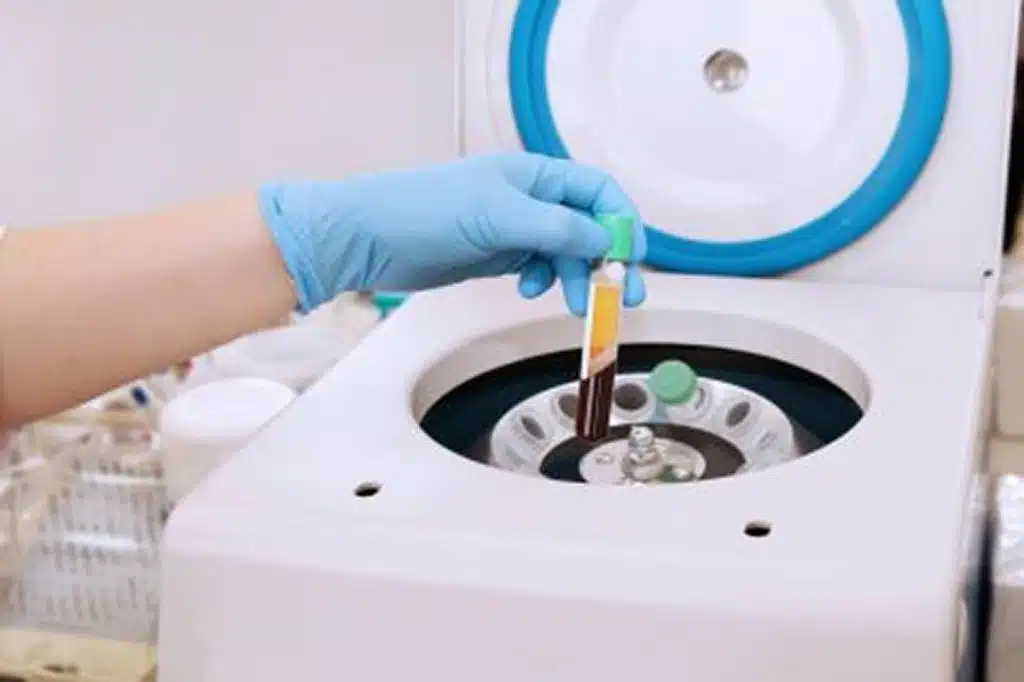
- Processing it in a centrifuge to concentrate platelets
- Injecting the platelet-rich portion into the injured joint or tissue, often under ultrasound guidance for precision
Because PRP is autologous (from your own body), the risk of allergic reaction is extremely low.
Conditions Where PRP May Be Considered
PRP may be appropriate for patients with:
- Mild to moderate knee osteoarthritis
- Chronic tendon injuries (tennis elbow, Achilles tendinopathy)
- Partial ligament injuries
- Rotator cuff tendinopathy and other shoulder conditions
- Early degenerative changes in hip, knee, or ankle
It is important to understand that PRP does not regenerate cartilage to a normal state and results vary based on injury type, severity, and individual healing response.
Highly Experienced & Trained Orthopedic Surgeon
Patient Centered Care You Can Trust
Stem Cell Therapy/OrthoBiologics
How PRP Compares to Other Treatment Options

PRP is one tool among many in orthopedic care:
- Physical therapy remains foundational for most injuries and degenerative conditions
- Corticosteroid injections may relieve pain temporarily but do not promote tissue repair
- Viscosupplementation may help joint lubrication in selected patients
- Surgery may be necessary when structural damage is severe or conservative care fails
My role as a physician is to help patients understand when PRP is reasonable and when other approaches are more appropriate.
Who Is a Reasonable Candidate?
PRP may be considered if you:
- Have chronic joint or tendon pain that has not responded to physical therapy or activity modification
- Have imaging findings showing mild to moderate degeneration or partial soft tissue injury
- Are looking to delay or avoid surgery when appropriate
- Are in overall good health with normal healing capacity
A thorough in-office evaluation, including imaging, is essential before determining candidacy.
What Patients Say after PRP Injection
Read Transcript
Hi, my name is Sharon Day. I’m 72 years old. I was involved in an accident, and Dr. Alrashid helped me tremendously. I could not move my left arm. I could not lift, cut food. I couldn’t even get dressed. We tried PRP. We tried physical therapy and everything. Prp is great. But I did not get any movement to ID that. We then went scopic surgery. Shoulder-operator. My shoulder, microscopic surgery on my shoulder. And I can now move. He did a great job fixing it, and I recommend him tremendously. If you have any type of shoulder pain or any type of pain that really needs a great doctor.
Read Transcript
Hi, my name is Stacey, and this is my dad. His right arm was just dwindling away. It was shrinking, and he couldn’t move this right arm at all. We had gone through therapy appointments, several of those, and that didn’t help. And so we came here, and Dr. Al-rashid talked to us about the PRP and to avoid surgery because my dad has issues with his heart as well, so to avoid surgery as well. So he did the PRP. The first round was remarkable because I could see the difference after the first round, and the colors started coming back to his hand and his arm, and he was able to move it. And so I was so amazed. So the second shot, it got better. Third shot, it’s going to get there. This is the third shot. And he could lift his arm up where he could not do that. And you see the colors coming back to his arm. He’s lifting weights at home with the arm to help with the strength. And so this is remarkable, recovery. And so we are really excited about this. Great. Thank.
How PRP Compares to Other Treatment Options
PRP is one tool among many in orthopedic care:
- Physical therapy remains foundational for most injuries and degenerative conditions
- Corticosteroid injections may relieve pain temporarily but do not promote tissue repair
- Viscosupplementation may help joint lubrication in selected patients
- Surgery may be necessary when structural damage is severe or conservative care fails
My role as a physician is to help patients understand when PRP is reasonable and when other approaches are more appropriate.
Who Is Not a Good Candidate?
PRP is likely not appropriate for patients with:
- Advanced or end-stage arthritis with significant joint collapse
- Complete tendon or ligament tears that require surgical repair
- Active infection or systemic inflammatory conditions
- Certain blood disorders or platelet dysfunction
- Unrealistic expectations of immediate or guaranteed improvement
In such cases, alternative treatments including surgical consultation, may be more effective.
Expert orthopedic care is just a click away. Book your consultation today.
Risks, Limitations, and What to Expect
PRP is generally low risk, but it is important to know:
Potential Risks:
- Temporary soreness or swelling at the injection site
- Bruising
- Rare infection
- Lack of improvement
Limitations:
- Results are variable; not all patients respond
- PRP does not restore normal cartilage or fully repair severe tissue damage
- Improvement is gradual, often taking weeks to months
Aftercare:
Most patients can resume light activity shortly after injection, but guided rehabilitation and activity modification help maximize outcomes.
- What Patients Say After Their Visit
At Palm Beach Regenerative Orthopedics, we’re dedicated to providing exceptional orthopedic care. If you had a positive experience with our team, we’d greatly appreciate you taking a moment to leave a review. Your feedback helps us improve and guides others in choosing trusted orthopedic care. Thank you for your support!

PRP in Palm Beach Patients
Many Palm Beach patients are active year-round. PRP may be considered as part of a plan to maintain mobility and function, especially when conservative care alone has not relieved symptoms. Individual evaluation is key: what works for one patient may not work for another.
Closing Note
Patients seeking relief from musculoskeletal pain may consider a PRP injection in Palm Beach Florida. Ethical, effective care requires recommending treatments that are medically reasonable, ensuring thorough evaluation, and engaging in shared decision-making with a qualified physician.
PRP injections at our practice is price per injection. Your exact cost depends on the joint being treated, the number of injections your plan calls for, and findings from your evaluation. Most insurance plans classify PRP as investigational and do not cover it we’ll walk you through the full cost and any financing options before you commit to treatment.