


Persistent knee pain can make everyday activities such as walking, climbing stairs, exercising, and getting out of a chair more difficult. Whether your symptoms are related to knee osteoarthritis, a previous sports injury, or changes in joint cartilage, understanding your treatment options is an important first step.
At Palm Beach Regenerative Orthopedics, patients throughout Palm Beach County can seek orthopedic evaluations and discuss available treatments, including conventional care and regenerative procedures sometimes described as stem cell therapy for knee pain.
Under the care of orthopedic surgeon Dr. Mamun Alrashid, patients can discuss their symptoms, review appropriate imaging, and receive individualized recommendations based on their diagnosis, medical history, and treatment goals.
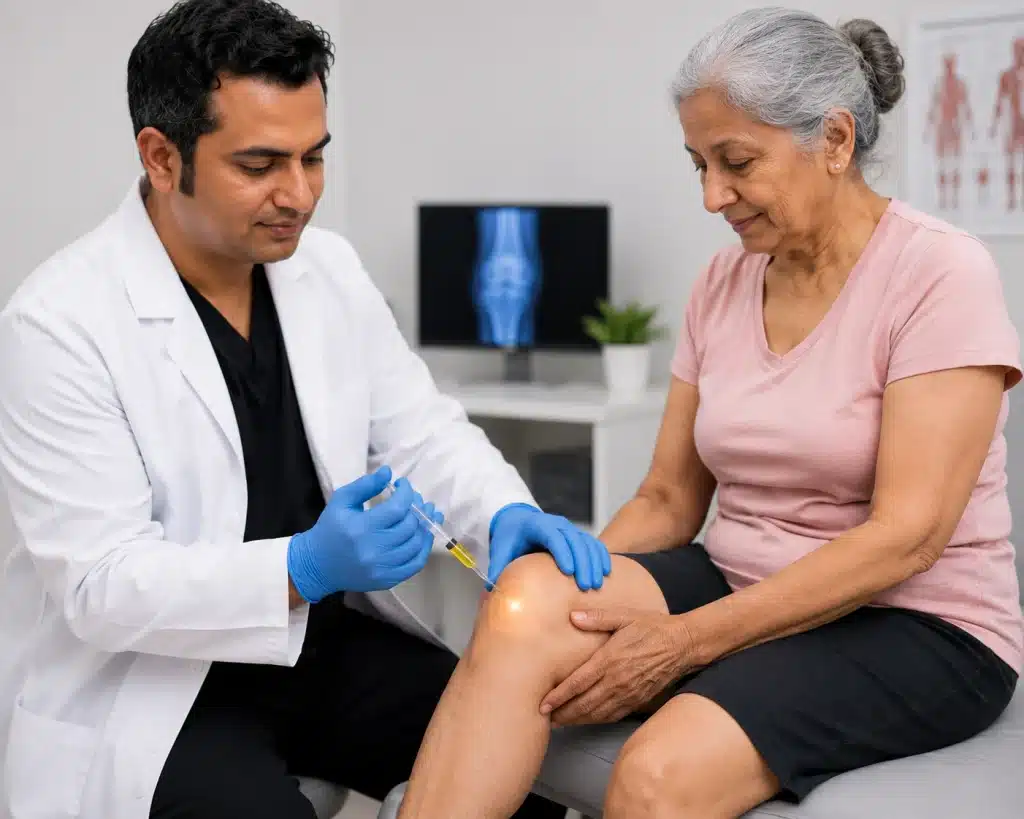
What Is Stem Cell Therapy for Knee Pain?
Stem cell therapy for knee pain is a commonly used term for certain regenerative medicine procedures involving cellular material. In orthopedic practice, some procedures use tissue collected from the patient’s own body, such as bone marrow or adipose (fat) tissue.
One example is bone marrow aspirate concentrate (BMAC), which contains a mixture of bone marrow cells and other biological components. BMAC is not the same as a purified stem cell product, and it should not be described as containing a standardized therapeutic dose of stem cells.
Researchers are studying whether certain cellular therapies can help patients with knee symptoms. However, evidence remains limited, treatment protocols vary, and these procedures have not been established as reliably restoring damaged cartilage or reversing knee osteoarthritis.
The U.S. Food and Drug Administration (FDA) states that regenerative medicine products marketed as stem cell therapies have not been approved to treat orthopedic conditions, including knee pain and osteoarthritis.
Patients should understand these limitations before deciding whether to pursue a regenerative procedure.
Benefits, Risks, and Limitations of Stem Cell-Related Knee Procedures
Research into regenerative orthopedic procedures continues to develop. Some studies report improvements in pain or function, but these findings do not establish that stem cell-related injections consistently outperform standard treatments.
Potential risks depend on the procedure and may include:
- Temporary pain or swelling.
- Bleeding or bruising.
- Infection.
- Tissue injury associated with harvesting or injection.
- Failure to improve symptoms.
- Additional risks related to the specific cellular product or processing method.
Long-term safety and effectiveness are not fully established for many cellular interventions.
Patients should also consider treatment costs and insurance coverage, because some regenerative procedures may require out-of-pocket payment.
No regenerative injection should be represented as guaranteed to eliminate knee pain, regrow cartilage, or prevent future knee replacement surgery.

Common Causes of Knee Pain in Palm Beach County Patients
Knee pain can develop gradually or occur after an injury. Identifying the underlying cause helps determine whether rehabilitation, medication, an injection, or surgery may be appropriate.
Knee Osteoarthritis
Knee osteoarthritis involves changes in the cartilage and other tissues within the joint. Symptoms may include stiffness, discomfort during activity, swelling, and reduced range of motion.
Treatment depends on symptom severity, examination findings, overall health, and personal goals.
Cartilage Damage
Cartilage injuries can occur after trauma or develop alongside degenerative joint changes. Some patients experience pain, swelling, or mechanical symptoms such as catching.
Not all cartilage injuries require surgery, but a clinical evaluation is important.
Meniscus Injuries
The meniscus helps distribute forces across the knee joint. Tears may occur during sports or through age-related tissue changes.
Treatment options depend on the type of tear, symptoms, knee stability, and whether osteoarthritis is also present.
Sports-Related Knee Injuries
Activities such as tennis, golf, running, cycling, and pickleball can place repetitive demands on the knee.
Sports-related pain may involve tendons, ligaments, cartilage, or other structures. An accurate diagnosis is necessary before choosing treatment.
Regenerative Knee Pain Treatment Options
Palm Beach Regenerative Orthopedics provides evaluations for patients interested in learning about orthobiologic procedures and other knee pain treatments.
Bone Marrow Aspirate Concentrate (BMAC)
BMAC is prepared from bone marrow obtained from the patient, typically through an aspiration procedure. The sample is processed to concentrate certain cellular components.
BMAC is being investigated for orthopedic applications, including knee osteoarthritis. Some clinical studies have reported improvements in patient-reported symptoms, but the evidence is inconsistent, and important questions remain about effectiveness, durability, and patient selection.
BMAC should not be presented as a proven cure for osteoarthritis or a reliable method of cartilage regeneration.
Adipose-Derived Cellular Procedures
Adipose-derived procedures involve material collected from a patient’s fat tissue.
Different processing methods produce different biological products, and their regulatory classifications and clinical evidence vary.
Patients considering these procedures should ask what material will be used, how it is processed, whether the proposed use complies with applicable FDA requirements, and what clinical evidence supports its use.
Platelet-Rich Plasma (PRP) Therapy
PRP is prepared from a patient’s blood and contains concentrated platelets.
Unlike cellular procedures involving bone marrow or adipose tissue, PRP is not generally classified as stem cell therapy.
Some research suggests PRP may improve symptoms in selected patients with knee osteoarthritis, but study findings vary. It does not reliably regenerate lost cartilage, and recommendations differ among professional organizations.
The most appropriate treatment depends on the patient’s diagnosis, clinical findings, preferences, and the available evidence.
Highly Experienced & Trained Orthopedic Surgeon
Patient Centered Care You Can Trust
Stem Cell Therapy/OrthoBiologics
What Patients Say after Knee Stem Cell Therapy
Read Transcript
Hi, my name is Sharon Day. I’m 72 years old. I was involved in an accident, and Dr. Alrashid helped me tremendously. I could not move my left arm. I could not lift, cut food. I couldn’t even get dressed. We tried PRP. We tried physical therapy and everything. Prp is great. But I did not get any movement to ID that. We then went scopic surgery. Shoulder-operator. My shoulder, microscopic surgery on my shoulder. And I can now move. He did a great job fixing it, and I recommend him tremendously. If you have any type of shoulder pain or any type of pain that really needs a great doctor.
Read Transcript
Hi, my name is Stacey, and this is my dad. His right arm was just dwindling away. It was shrinking, and he couldn’t move this right arm at all. We had gone through therapy appointments, several of those, and that didn’t help. And so we came here, and Dr. Al-rashid talked to us about the PRP and to avoid surgery because my dad has issues with his heart as well, so to avoid surgery as well. So he did the PRP. The first round was remarkable because I could see the difference after the first round, and the colors started coming back to his hand and his arm, and he was able to move it. And so I was so amazed. So the second shot, it got better. Third shot, it’s going to get there. This is the third shot. And he could lift his arm up where he could not do that. And you see the colors coming back to his arm. He’s lifting weights at home with the arm to help with the strength. And so this is remarkable, recovery. And so we are really excited about this. Great. Thank.
Who May Be Considered for a Regenerative Knee Pain Consultation?
An orthopedic consultation may be useful for patients who:
- Have persistent knee discomfort despite appropriate conservative care.
- Have been diagnosed with knee osteoarthritis or a cartilage-related condition.
- Experience activity-related knee pain or stiffness.
- Want to understand nonsurgical and surgical treatment options.
- Have questions about BMAC, PRP, or other orthobiologic procedures.
- Want to understand potential benefits, risks, costs, and treatment uncertainties before making a decision.
What Happens During a Knee Pain Consultation?
1. Medical History and Physical Examination
Your orthopedic evaluation begins with a discussion of your symptoms, previous injuries, medical conditions, activity level, and treatments already attempted.
2. Review of Diagnostic Imaging
Depending on your symptoms and examination, standing knee X-rays or other imaging may help assess joint changes and identify possible causes of pain. An MRI is not necessary for every patient.
3. Discussion of Treatment Options
Your clinician may discuss options such as physical therapy, strengthening exercises, activity modification, weight management when appropriate, medications, injections, or surgical consultation. Regenerative procedures may also be discussed where clinically appropriate, with a clear explanation of the available evidence and regulatory considerations.
4. Individualized Treatment Planning
The goal is to help you understand the likely benefits and limitations of each option so you can make an informed decision. Not every patient needs an injection, and not every patient benefits from the same treatment.
Stem Cell Therapy vs. Knee Replacement Surgery
Stem cell-related procedures and knee replacement surgery are fundamentally different treatment approaches.
Knee replacement is an established surgical treatment for selected patients with severe symptomatic knee arthritis when appropriate nonsurgical care has not provided sufficient relief.
Cell-based regenerative procedures remain investigational for many orthopedic uses, and they have not been shown to reliably replace knee arthroplasty in patients who otherwise require it.
If your knee symptoms significantly affect daily activities, an orthopedic evaluation can help clarify whether continued conservative management, another procedure, or surgical treatment is more appropriate.
Expert orthopedic care is just a click away. Book your consultation today.
- What Patients Say After Their Visit
At Palm Beach Regenerative Orthopedics, we’re dedicated to providing exceptional orthopedic care. If you had a positive experience with our team, we’d greatly appreciate you taking a moment to leave a review. Your feedback helps us improve and guides others in choosing trusted orthopedic care. Thank you for your support!
Knee Pain Evaluations for Palm Beach County Residents
Palm Beach Regenerative Orthopedics serves patients seeking orthopedic care in Palm Beach County, Florida.
Patients from communities including Jupiter, Palm Beach Gardens, West Palm Beach, Palm Beach, Wellington, and surrounding areas can contact the practice to arrange an appointment at an available office.