

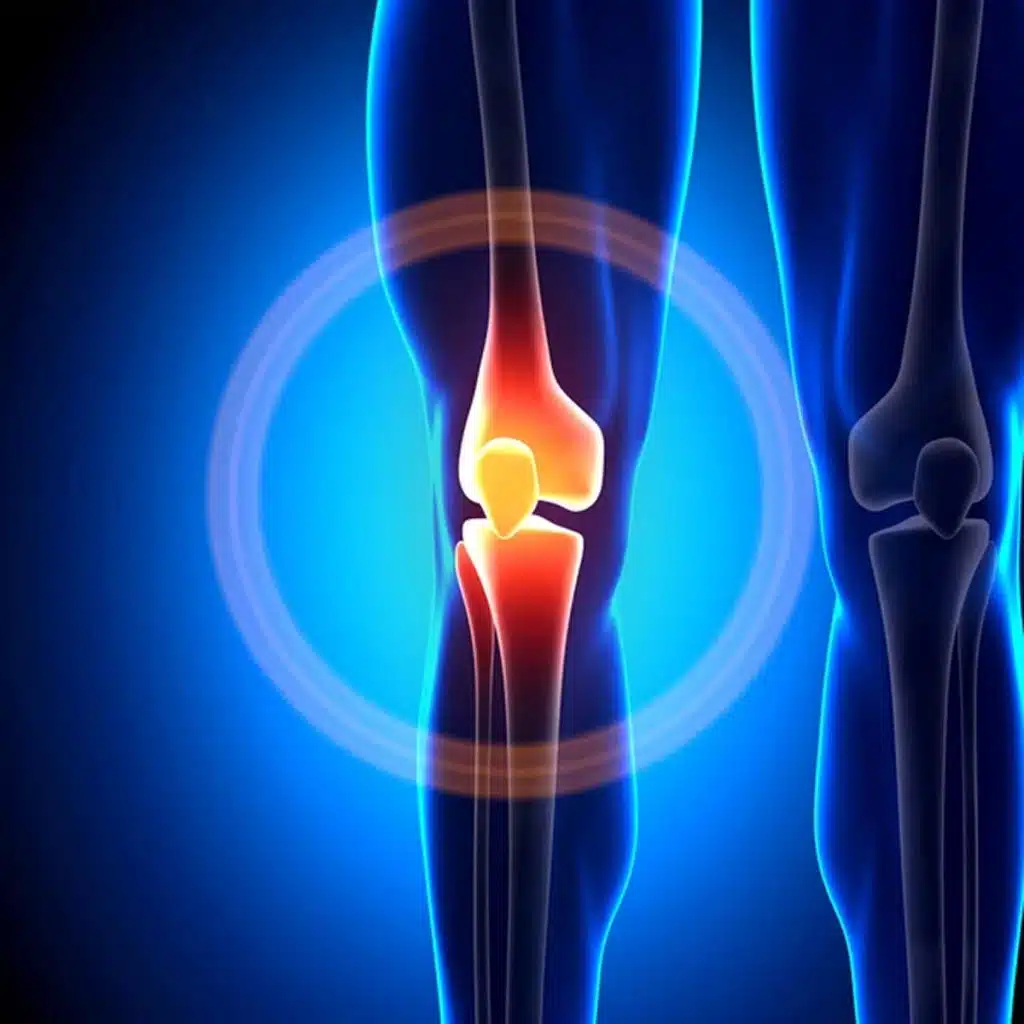

Ligament injuries are a common reason patients visit our orthopedic clinic. Twisting a knee while playing sports, stepping off a curb awkwardly, or a sudden fall can stretch or tear important stabilizing tissues in the body. Injuries to structures such as the Anterior Cruciate Ligament, Medial Collateral Ligament, Posterior Cruciate Ligament, and Lateral Collateral Ligament often lead to pain, instability, swelling, and reduced mobility.
In my clinical practice treating patients from Jupiter, Florida and nearby communities, ligament injury care in Jupiter, Florida focuses on restoring stability and function while avoiding unnecessary surgery when possible. Our approach uses careful orthopedic evaluation, imaging, rehabilitation, and regenerative orthopedic options when appropriate to support the body’s natural healing process.
Ligaments and Their Role in Joint Stability
Ligaments are strong connective tissues that connect bone to bone. They stabilize joints and guide normal movement. When a ligament is stretched beyond its capacity or torn, the joint can become unstable.
In the knee, several ligaments work together to maintain alignment and motion. Damage to one or more structures—such as the Anterior Cruciate Ligament or Medial Collateral Ligament—may lead to instability when walking, pivoting, or climbing stairs.
Ligament injuries may occur in many joints, including:
- Knee
- Ankle
- Wrist
- Shoulder
- Thumb
Clinically, ligament injuries range from mild stretching to complete rupture.
Severity of Ligament Injuries
Orthopedic specialists often classify ligament injuries into three grades.
Grade I (Mild)
Microscopic tearing without significant joint instability. Pain and swelling may be present but movement remains relatively stable.
Grade II (Moderate)
Partial tearing of ligament fibers. Patients may experience joint looseness and difficulty bearing weight.
Grade III (Severe)
Complete rupture of the ligament. The joint may feel unstable or “give way,” and surgical reconstruction may sometimes be recommended.
In severe knee injuries, procedures such as Anterior Cruciate Ligament Reconstruction may be considered if conservative care is not sufficient.
Board Certified Sports Medicine Physician in Jupiter FL
Patient Centered Care You Can Trust
Dr. Mamun Alrashid Sports Medicine Physician Offers
Causes of Ligament Injuries
Through years of providing ligament injury care in Jupiter, Florida, I have seen that ligament injuries frequently occur during:
- Sudden twisting motions
- Sports involving rapid direction changes
- Falls or direct trauma
- Motor vehicle accidents
- Overextension of a joint
Athletes are at higher risk, but many injuries occur during everyday activities such as stepping off a ladder or slipping on wet flooring.
Symptoms Patients Often Notice
Ligament injuries can present with several recognizable symptoms:
- Sudden pain at the joint
- Swelling within hours after injury
- Bruising or tenderness
- Limited range of motion
- A feeling of instability or joint “giving out”
- Difficulty walking or bearing weight
Some patients report hearing or feeling a “pop” at the time of injury, particularly with Anterior Cruciate Ligament Tear injuries.
Evaluation in Our Orthopedic Clinic
A careful evaluation helps determine the severity of the injury and the most appropriate treatment plan.
In our clinic, assessment may include:
Detailed orthopedic physical examination
Joint stability tests
Imaging studies such as Magnetic Resonance Imaging
X-rays to rule out fractures
Accurate diagnosis is essential because some injuries involve both ligaments and nearby structures such as the Achilles Tendon or other stabilizing tissues.
Non-Surgical Ligament Injury Care
Many ligament injuries can improve with conservative treatment. My approach typically begins with structured, evidence-based care designed to reduce pain and restore joint stability.
Rest and Activity Modification
Limiting movements that stress the injured ligament allows the body to begin repairing damaged tissue.
Bracing or Support
Bracing can stabilize the joint while healing occurs.
Physical Therapy
Rehabilitation is a cornerstone of ligament injury recovery. Targeted exercises help restore strength, balance, and mobility.
Regenerative Orthopedic Treatments
In selected cases, regenerative options such as Platelet-Rich Plasma Therapy or Stem Cell Therapy may be considered to support tissue repair.
These treatments aim to introduce biologically active cells or growth factors into injured areas. As part of ligament injury care in Jupiter, Florida, these regenerative options may support the body’s healing response. While many patients experience improvement, outcomes vary and scientific research continues to evolve.
Situations Where Surgery May Be Recommended
Some ligament injuries require surgical repair, particularly when:
- The ligament is completely torn
- The joint remains unstable after rehabilitation
- Multiple ligaments are injured
- The patient participates in high-demand athletics
Surgical techniques such as Knee Ligament Repair or Anterior Cruciate Ligament Reconstruction aim to restore stability using graft tissue.
Recovery from surgery often requires several months of rehabilitation.
Patients Who May Benefit From Our Ligament Injury Care
Individuals who may be appropriate candidates often include:
- Adults with mild to moderate ligament injuries
- Patients seeking non-surgical orthopedic care first
- Individuals experiencing persistent joint pain or instability
- Patients looking to improve function and mobility
A thorough medical assessment is always required before recommending regenerative therapies.
Expert orthopedic care is just a click away. Book your consultation today.
Situations Where This Approach May Not Be Appropriate
Not every patient is a candidate for regenerative orthopedic treatments.
- Complete ligament ruptures requiring surgical reconstruction
- Advanced joint instability
- Active infections
- Certain systemic medical conditions
- Patients expecting immediate or guaranteed recovery
These therapies may not be appropriate for:
Potential Risks and Limitationsre
All medical treatments carry some degree of risk.
Possible considerations include:
- Temporary swelling or soreness at the injection site
- Infection, though rare
- Incomplete symptom relief
- Need for additional therapy or surgery
Regenerative treatments remain an evolving area of orthopedic medicine. While research and clinical experience are encouraging, outcomes can vary between individuals.


Before all of this he was very careful and helpful, explaining everything in detail from beginning to end, even tried a few treatments before jumping into an operation.
(injections/pills/scans etc)
He explained the pros and con very well. His staff is excellent in the Loxahatchee and Lake Worth office. I'm very happy I found him. My leg feels superior than my normal leg and it's only been three weeks. The incision was tiny, and after seeing him three weeks after the operation (today), the prosthetic is perfectly in place. I barely have any pain other than wound aches from the muscle incision, which of course is healing every single day.
I no longer feel any electrical surges on my leg, spasms, or the leg not waking up when I'm in a sitting position or sleeping. Literally feels perfect. I have nothing negative to say, would definitely recommend him to everybody. I like the fact that he was very detailed with everything from beginning to end.
He takes his job very seriously well being relatable and is not the type of doctor that jumps into an instant operation, unless absolutely needed, which is positive.
Orthopedic Care for Jupiter Patients
Patients traveling from Jupiter, Florida often seek treatment for ligament injuries after sports activities, workplace injuries, or everyday accidents. My goal is to provide careful evaluation and evidence-based treatment plans that prioritize safety, function, and long-term joint health.
Treatment decisions are always individualized, and collaboration with physical therapists and other specialists may be recommended when needed.
Frequently Asked Questions
Can a ligament heal without surgery?
Yes. Many mild to moderate ligament injuries heal with rest, rehabilitation, and supportive care. Complete tears or severe instability sometimes require surgical repair.
How long does recovery take?
Recovery time varies widely. Mild injuries may improve within several weeks, while more severe injuries may require several months of rehabilitation.
Is regenerative therapy proven for ligament injuries?
Research suggests treatments like Platelet-Rich Plasma Therapy may support healing in certain cases. However, results are not guaranteed and studies are ongoing.
When should someone see an orthopedic physician?
Persistent swelling, instability, difficulty bearing weight, or pain lasting more than a few days after injury should be evaluated by a specialist.
Can ligament injuries return after healing?
Reinjury is possible, especially without proper rehabilitation or when returning to high-impact activities too quickly.