
PRP (platelet-rich plasma) injection therapy uses concentrated platelets from your own blood to deliver growth factors directly into an injured joint, tendon, or ligament. At Palm Beach Regenerative Orthopedics, this treatment is offered to Jupiter-area patients with tendonitis, mild-to-moderate arthritis, or sports-related soft tissue injuries who are looking for a non-surgical option after conservative care hasn’t resolved their pain.
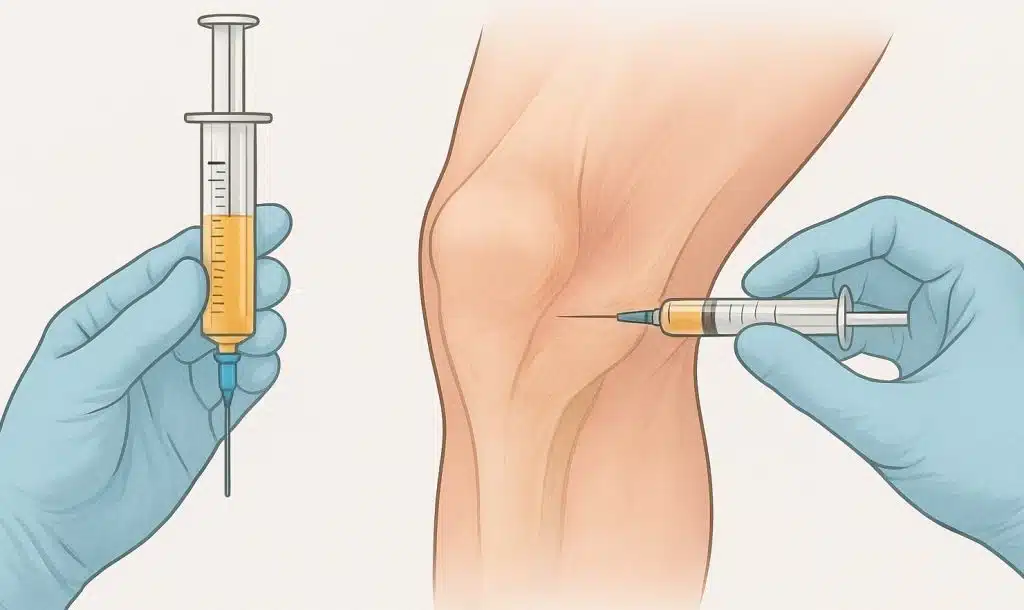
The procedure is performed in-office, using ultrasound guidance to place the injection precisely.
When can PRP Therapy be used?
PRP therapy is commonly used in orthopedic pain treatment for conditions involving joints, tendons, ligaments, cartilage, and soft tissue injuries. Patients throughout Jupiter and Palm Beach County often choose regenerative medicine because it may help reduce inflammation, improve function, encourage tissue repair, and potentially delay or avoid surgery.
Whether you are dealing with knee pain, shoulder injuries, tendonitis, arthritis, or sports-related injuries, PRP injections may provide a non-surgical joint pain relief option tailored to your condition and activity level.
What Is Platelet-Rich Plasma (PRP) Therapy?
Platelet-Rich Plasma Therapy is a regenerative medicine treatment that uses a concentrated portion of the patient’s own blood to support tissue healing and recovery.
How Does PRP Therapy Work?
PRP therapy begins with a small blood draw, similar to a standard laboratory test. The blood sample is then placed into a centrifuge, which spins at high speed to separate blood components.
The platelet-rich portion contains concentrated:
Growth factors
Healing proteins
Cytokines
Bioactive molecules involved in tissue repair
Once prepared, the PRP solution is injected into the targeted treatment area using advanced ultrasound-guided injections for improved precision and accuracy.
The goal of PRP therapy is to support the body’s natural healing process by delivering regenerative biologic material directly into damaged or inflamed tissue.
Highly Experienced & Trained Orthopedic Surgeon
Patient Centered Care You Can Trust
Stem Cell Therapy/OrthoBiologics
Why Is PRP Considered Regenerative Medicine?
PRP therapy falls under the category of regenerative orthopedics and orthobiologics because it focuses on stimulating the body’s own repair mechanisms rather than masking symptoms alone.

Unlike temporary pain-relief approaches, regenerative medicine aims to:
- Support tendon healing
- Encourage tissue regeneration
- Improve musculoskeletal function
- Address underlying inflammation
- Promote long-term orthopedic recovery
What Is the Difference Between PRP and Steroid Injections?
Steroid injections are commonly used to temporarily reduce inflammation and pain. However, corticosteroids primarily suppress inflammation rather than encourage tissue healing.
PRP injections differ because they are designed to support biologic repair using the patient’s own platelets and growth factors.
Potential differences include:
| Feature | PRP Therapy | Steroid Injection |
|---|---|---|
| Uses patient's own blood | Yes | No |
| Focus on tissue healing | Yes | Limited |
| Anti-inflammatory effect | Natural biologic response | Chemical suppression |
| Repeat use concerns | Lower systemic exposure | Possible tissue weakening with repeated use |
| Regenerative approach | Yes | No |
How Long Does the Tissue Regeneration Process Take?
Healing timelines vary depending on the condition being treated, the severity of tissue damage, activity level, and overall health.
Some patients notice gradual improvements within several weeks, while regenerative healing and collagen remodeling may continue for several months following treatment.
Conditions Treated With PRP Injections
PRP injections are commonly used in sports medicine and regenerative orthopedic care to help manage a wide range of musculoskeletal conditions.
PRP Therapy for Knee Pain
Knee pain can develop from arthritis, cartilage wear, ligament injuries, overuse, or sports-related trauma.
Common symptoms include:
- Swelling
- Stiffness
- Reduced mobility
- Pain with walking or exercise
PRP injections may help support tissue healing and reduce inflammation within the knee joint. Many patients seeking PRP in Palm Beach County, FL are looking for alternatives to surgery or repeated steroid injections.
Shoulder injuries often involve the rotator cuff tendons, bursitis, labral irritation, or chronic inflammation.
Symptoms may include:
- Pain with lifting
- Weakness
- Limited range of motion
- Night pain
PRP injections in Florida are increasingly used as part of conservative orthopedic treatment plans for chronic shoulder conditions and tendon injuries.
Tennis Elbow and Golfer’s Elbow
Tennis elbow (lateral epicondylitis) and golfer’s elbow (medial epicondylitis) are repetitive stress injuries affecting the tendons around the elbow.
PRP therapy may help:
- Support tendon healing
- Reduce chronic inflammation
- Improve grip strength
- Enhance recovery from repetitive overuse injuries
Chronic tendonitis can affect:
- Achilles tendon
- Patellar tendon
- Hamstring tendons
- Wrist tendons
- Shoulder tendons
Because tendons often have limited blood supply, healing may be slow. PRP therapy delivers concentrated growth factors directly into damaged tissue areas to support tendon repair.
Ligament sprains and instability may occur in the:
- Knee
- Ankle
- Wrist
- Shoulder
Regenerative orthopedic care in West Palm Beach often incorporates image-guided PRP injections to support healing in partially injured ligaments.
Arthritis and Degenerative Joint Pain
Mild-to-moderate osteoarthritis can cause:
- Joint stiffness
- Swelling
- Pain with movement
- Reduced function
PRP therapy may help reduce inflammatory joint symptoms while supporting cartilage health and mobility in select patients.
Sports Injuries
Athletes frequently seek PRP therapy for:
- Muscle strains
- Ligament injuries
- Tendon damage
- Joint overuse injuries
Sports medicine specialists may incorporate PRP into comprehensive rehabilitation programs designed to optimize recovery and return to activity.
Hip Pain
Hip pain may result from:
- Labral irritation
- Tendon injuries
- Arthritis
- Bursitis
PRP injections may help reduce pain and improve function while avoiding more invasive procedures when appropriate.
Back Pain and Neck Pain
Certain spine-related pain conditions involving muscles, ligaments, or facet joints may benefit from regenerative injection approaches.
Patients seeking non-surgical orthopedic care often explore PRP therapy as part of conservative treatment strategies for chronic musculoskeletal pain.
Plantar Fasciitis
Plantar fasciitis causes heel pain due to inflammation and degeneration of the plantar fascia tissue.
PRP therapy may help support tissue healing in chronic cases that have not responded to stretching, orthotics, or physical therapy.
Benefits of Platelet-Rich Plasma Therapy
PRP therapy continues to gain attention because it offers a minimally invasive orthopedic treatment option that works with the body’s natural biologic healing response.
Expert orthopedic care is just a click away. Get your consultation today.
Potential Benefits of PRP Injections
Natural Treatment Using Your Own Blood
Because PRP is created from the patient’s own blood, the treatment avoids synthetic medications or foreign biologic materials.
Minimally Invasive Procedure
PRP injections are typically performed in an outpatient office setting without large incisions or extended surgical recovery.
Reduced Inflammation
Growth factors and biologic mediators may help regulate inflammation associated with chronic orthopedic conditions.
Reduced Reliance on Pain Medications
Some patients pursue regenerative medicine to reduce dependence on anti-inflammatory medications or repeated cortisone injections.
Potential Alternative to Surgery
In select orthopedic conditions, PRP may help delay or avoid surgical intervention when conservative treatment is appropriate.
Improved Mobility and Function
By supporting tissue healing and reducing discomfort, PRP therapy may help improve movement, activity tolerance, and quality of life.
Who May Be a Candidate for PRP Therapy?
PRP therapy may benefit individuals experiencing chronic orthopedic pain, tendon injuries, joint degeneration, or sports-related conditions.
Common Candidates Include:
- Athletes with overuse injuries
- Active adults seeking faster recovery
- Patients with mild-to-moderate arthritis
- Individuals trying to avoid surgery
- Patients with tendonitis or ligament injuries
- People seeking non-surgical joint pain relief
Important Safety Considerations
Not every patient is an ideal candidate for PRP therapy. A thorough orthopedic evaluation is important to determine:
- Diagnosis accuracy
- Severity of tissue damage
- Overall health status
- Treatment goals
- Previous treatment history
Personalized treatment plans help ensure that regenerative medicine recommendations align with the patient’s condition and expectations.
Why Choose Palm Beach Regenerative Orthopedics for PRP Therapy?
Choosing an orthopedic provider for regenerative medicine involves more than simply finding a clinic offering injections. Experience, patient evaluation, diagnostic accuracy, and treatment planning all play important roles.
Personalized Treatment Plans
Every patient receives individualized recommendations based on:
- Diagnosis
- Activity level
- Symptoms
- Imaging findings
- Functional goals
Patient-Centered Care
The clinic prioritizes:
- Education
- Conservative treatment strategies
- Transparent expectations
- Long-term orthopedic function
Advanced Imaging Guidance
Ultrasound-guided injections improve procedural precision and help ensure accurate placement of PRP into targeted tissue structures.
Regenerative Medicine Experience
PRP therapy is part of a broader orthobiologic and regenerative orthopedic approach focused on supporting the body’s natural healing processes.
Trusted Care in Florida
Patients throughout Jupiter, Palm Beach County, and surrounding Florida communities seek minimally invasive orthopedic treatment options designed to reduce pain and improve mobility while avoiding unnecessary surgery when appropriate.
PRP injections at our Jupiter office start at ($$$) per injection. The exact cost depends on the joint or tendon being treated and how many injections your evaluation indicates you’ll need. Most insurance plans treat PRP as investigational and don’t cover it, so we’ll confirm your total cost after your consultation, before you commit to treatment.
What to Expect During PRP Treatment
Understanding the PRP process can help patients feel more comfortable before treatment.
Step 1: Consultation and Evaluation
The process begins with a comprehensive orthopedic consultation that may include:
- Medical history review
- Physical examination
- Imaging studies
- Functional assessment
The provider evaluates whether PRP therapy is appropriate based on the specific orthopedic condition.
Step 2: Blood Draw
A small sample of blood is collected from the patient’s arm.
Step 3: Platelet Concentration Process
The blood sample is processed in a centrifuge to isolate platelet-rich plasma from other blood components.
This creates a concentrated solution containing platelets and growth factors.
Step 4: Ultrasound-Guided Injection
The PRP solution is carefully injected into the injured tissue using image-guided injections and ultrasound technology for precise placement.
Ultrasound guidance helps improve accuracy and treatment targeting.
Step 5: Recovery and Follow-Up
Most PRP injections are minimally invasive office procedures that allow patients to return home the same day.
Recovery recommendations may include:
- Temporary activity modification
- Physical therapy
- Gradual return to exercise
- Follow-up evaluations
Some soreness may occur for several days after treatment as the healing response begins.
PRP Injection vs Traditional Treatments
| Treatment Feature | PRP Injection | Steroid Injections | Surgery |
|---|---|---|---|
| Treatment Type | Regenerative medicine approach | Anti-inflammatory medication | Operative procedure |
| Primary Goal | Support the body's natural healing response | Reduce inflammation and relieve pain | Repair or reconstruct damaged structures |
| Uses Patient's Own Biology | Often yes (depending on the procedure) | No | No |
| Invasiveness | Minimally invasive | Minimally invasive | Highly invasive |
| Downtime | Typically limited | Minimal | Often extended |
| Recovery Timeline | Gradual healing over time | Short-term symptom relief | Weeks to months |
| Long-Term Tissue Support | May support tissue healing in appropriate patients | Limited | Depends on the procedure and condition |
| Medication Dependency | May reduce reliance on pain medication | Repeat injections may be needed | Postoperative medications are commonly required |
| Office-Based Procedure | Usually yes | Yes | Usually no |
| Anesthesia Requirement | Minimal or none | Minimal | Often required |
- What Patients Say After Their Visit
At Palm Beach Regenerative Orthopedics, we’re dedicated to providing exceptional orthopedic care. If you had a positive experience with our team, we’d greatly appreciate you taking a moment to leave a review. Your feedback helps us improve and guides others in choosing trusted orthopedic care. Thank you for your support!
Frequently Asked Questions About PRP Therapy
What is platelet-rich plasma therapy?
How long does PRP therapy last?
Is PRP therapy safe?
How many PRP injections are needed?
Does PRP therapy hurt?
What conditions can PRP treat?
Is PRP therapy covered by insurance?
How much does PRP cost in Jupiter?
How soon can I exercise after PRP therapy?
Is PRP better than cortisone injections?
How long does PRP recovery take?
Regenerative Orthopedic Care Focused on Long-Term Function
Many orthopedic conditions develop gradually over time due to repetitive stress, degeneration, inflammation, athletic activity, or injury. Regenerative medicine and orthobiologic therapies aim to support healing while helping patients remain active and functional.
At Palm Beach Regenerative Orthopedics, PRP injections are part of a comprehensive approach focused on:
- Musculoskeletal pain management
- Conservative orthopedic care
- Tendon healing support
- Cartilage preservation strategies
- Sports medicine recovery
- Image-guided minimally invasive procedures
Patients seeking alternatives to surgery in Jupiter and Palm Beach County often explore PRP therapy as part of individualized orthopedic treatment plans.
Schedule a PRP Consultation in Jupiter, Florida
If you are experiencing chronic joint pain, tendon injuries, arthritis symptoms, or sports-related orthopedic conditions, PRP therapy may be worth exploring as part of a personalized regenerative medicine treatment plan.
Speak With a PRP Specialist
Palm Beach Regenerative Orthopedics provides patient-focused orthopedic evaluations designed to determine whether regenerative therapies may be appropriate for your condition.
Request an Appointment
Learn more about:
- PRP injections
- Orthobiologic treatments
- Non-surgical orthopedic care
- Sports injury treatment
- Joint pain solutions
- Regenerative medicine options in Florida