

As a board-certified orthopedic physician practicing in Wellington and Palm Beach County, I evaluate patients every week who are living with persistent spine and joint pain. Many arrive frustrated they’ve tried physical therapy, medications, chiropractic care, or rest, yet their symptoms continue.
Pain management injections are not a cure-all, and they are not appropriate for everyone. However, when carefully selected and performed with precision, they can reduce inflammation, clarify a diagnosis, and in some cases delay or prevent the need for surgery.
This page explains what these injections are, who may benefit, what the risks are, and how they compare to other treatments so you can make an informed decision.
What Is Spinal Injection Therapy?
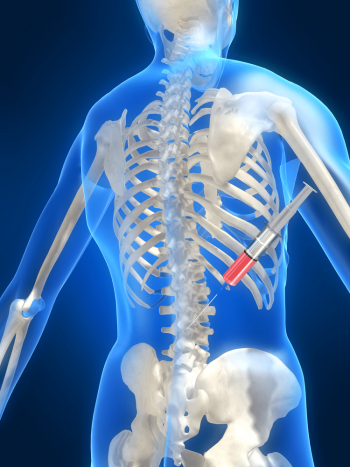
Spinal injection therapy refers to image-guided procedures designed to diagnose or treat pain coming from irritated spinal nerves, inflamed joints, or damaged discs.
In my practice, these injections are performed using:
- Fluoroscopy guidance – real-time X-ray needle placement
- Ultrasound-guided injection – soft tissue needle visualization
- Image-guided precision – safety-focused needle placement
- Contrast dye – confirm epidural spread pattern
- Strict sterile technique protocols – infection prevention standards
- An outpatient procedure setting – ambulatory injection treatment
The goal is accuracy, safety, and clarity — not guesswork.
Conditions Commonly Treated in Wellington & Palm Beach Patients
Pain patterns differ depending on the underlying condition. In our community, I frequently evaluate:
- Chronic back pain – persistent axial spine pain
- Neck pain – cervical spine pain condition
- Herniated disc – lumbar or cervical disc protrusion
- Spinal stenosis – narrowing causing nerve compression
- Sciatica – radiating leg nerve pain
- Radiculopathy – nerve root irritation symptoms
- Degenerative disc disease – age-related disc degeneration
- Facet joint arthritis – degenerative posterior joint pain
Each diagnosis requires a different injection approach. A careful exam and imaging review are essential before proceeding.
Highly Experienced & Trained Orthopedic Clinic in Wellington FL
Patient Centered Care You Can Trust
Types of Pain Management Injections We Perform
1. Epidural Steroid Injection (ESI)
Epidural steroid injection – spinal nerve inflammation treatment
This is one of the most common procedures for:
- Sciatica
- Spinal stenosis
- Herniated disc
- Radiculopathy
A corticosteroid injection – anti-inflammatory steroid medication is placed into the epidural space around irritated spinal nerves. A local anesthetic – diagnostic temporary numbing agent is typically included to confirm the pain source.
Fluoroscopy and contrast dye are used to verify accurate medication spread.
Purpose: Reduce nerve inflammation and improve leg or arm pain.
2. Facet Joint Injection
Facet joint injection – posterior spinal joint injection
Facet joints are small stabilizing joints in the back of the spine. When arthritic or inflamed, they can cause localized chronic back pain or neck pain.
Medication is placed directly into the joint using fluoroscopy guidance.
If pain relief is short-lived but significant, a medial branch block – diagnostic facet nerve block may be performed next.
3. Medial Branch Block & Radiofrequency Ablation
A medial branch block temporarily numbs the small nerves that supply the facet joints. If two diagnostic blocks provide consistent relief, radiofrequency ablation– thermal medial branch denervation may be considered.
Radiofrequency ablation uses heat to interrupt pain signals for months at a time. It does not reverse arthritis but may reduce pain from facet joint arthritis.
4. Selective Nerve Root Block
Selective nerve root block – targeted nerve inflammation injection
Used when imaging shows a specific nerve root compression, often from a herniated disc.
This injection helps:
- Confirm the exact nerve causing symptoms
- Reduce localized inflammation
5. Sacroiliac Joint Injection
Sacroiliac joint injection – SI joint pain treatment
The SI joint connects the spine to the pelvis. Dysfunction here can mimic disc pain. Image-guided injection confirms diagnosis and may reduce inflammation.
6. Trigger Point Injection
Trigger point injection – myofascial pain treatment
Used for muscular pain patterns in the neck, upper back, or lower back. Often performed with ultrasound-guided injection techniques.
Who Is a Good Candidate?
Based on my clinical experience, ideal candidates typically:
- Have persistent pain lasting more than 4–6 weeks
- Have imaging (MRI or CT) correlating with symptoms
- Have failed conservative treatment (physical therapy, activity modification)
- Have symptoms consistent with radiculopathy, spinal stenosis, or facet joint arthritis
- Prefer to delay or avoid surgery if safely possible
Who May Not Be a Good Candidate?
Injection therapy may not be appropriate if you:
- Have uncontrolled diabetes (steroids can raise blood sugar)
- Have active infection
- Take certain blood thinners that cannot be safely paused
- Have purely mechanical instability requiring surgical correction
- Expect permanent results from a single injection
These procedures manage inflammation — they do not “repair” structural damage.


Before all of this he was very careful and helpful, explaining everything in detail from beginning to end, even tried a few treatments before jumping into an operation.
(injections/pills/scans etc)
He explained the pros and con very well. His staff is excellent in the Loxahatchee and Lake Worth office. I'm very happy I found him. My leg feels superior than my normal leg and it's only been three weeks. The incision was tiny, and after seeing him three weeks after the operation (today), the prosthetic is perfectly in place. I barely have any pain other than wound aches from the muscle incision, which of course is healing every single day.
I no longer feel any electrical surges on my leg, spasms, or the leg not waking up when I'm in a sitting position or sleeping. Literally feels perfect. I have nothing negative to say, would definitely recommend him to everybody. I like the fact that he was very detailed with everything from beginning to end.
He takes his job very seriously well being relatable and is not the type of doctor that jumps into an instant operation, unless absolutely needed, which is positive.
Risks, Limitations, and Uncertainties
All injections carry potential risks, including:
- Temporary increase in pain
- Bleeding
- Infection (rare with sterile technique protocols)
- Nerve irritation
- Allergic reaction to contrast dye
- Temporary numbness or weakness from local anesthetic
- Elevated blood sugar (in diabetic patients)
Steroid injections are typically limited in frequency due to potential systemic effects.
Relief duration varies:
- Some patients experience weeks to months of improvement
- Others may have minimal benefit
Results cannot be guaranteed.
How Do Injections Compare to Surgery?
For certain conditions like:
- Severe spinal stenosis with progressive weakness
- Large herniated disc causing neurological deficit
Surgery may be more appropriate.
However, for many patients with stable radiculopathy or chronic back pain without neurological decline, injection therapy may:
- Reduce inflammation
- Improve function
- Delay or eliminate need for surgery
Injections are less invasive, performed in an outpatient procedure setting, and have shorter recovery time compared to surgical intervention.
A thoughtful discussion with a board-certified pain management physician or spine specialist is essential.
Expert orthopedic care is just a click away.
Book your consultation today.
What to Expect During the Procedure
- You arrive at the outpatient procedure setting.
- The skin is sterilized using strict sterile technique protocols.
- Fluoroscopy guidance ensures precise needle placement.
- Contrast dye confirms proper medication spread.
- Local anesthetic is given, followed by corticosteroid injection if needed.
- You are monitored briefly and discharged the same day.
Most procedures take 10–20 minutes.
A Responsible Approach to Spine Pain in Wellington
As physicians serving the Wellington and greater Palm Beach community, our responsibility is not simply to reduce pain temporarily — but to diagnose accurately, apply evidence-based treatment, and guide patients toward long-term functional improvement.
Pain management injections can be an important tool when used appropriately. They are most effective as part of a broader plan that may include:
- Physical therapy
- Strength and mobility work
- Activity modification
- Weight optimization
- Surgical consultation when indicated
If you are experiencing chronic back pain, neck pain, sciatica, or radiculopathy, a comprehensive evaluation is the first step.
Frequently Asked Questions
Are epidural steroid injections safe?
When performed by a board-certified pain management physician using fluoroscopy guidance and sterile technique protocols, serious complications are uncommon. However, no procedure is risk-free.
How long does pain relief last?
Relief may last from several weeks to several months. Some patients require repeat injections, while others may not respond significantly.
Do injections cure herniated discs?
No. Injections reduce inflammation around irritated nerves but do not remove or reverse the disc protrusion.
Will I need surgery eventually?
Not necessarily. Some patients improve enough to avoid surgery. Others may ultimately require it if structural compression progresses.
How many injections can I have?
Typically limited to a small number per year due to steroid exposure considerations.
Is the procedure painful?
Most patients tolerate it well. A local anesthetic is used to minimize discomfort.
Contact Us!
Palm Beach Regenerative Orthopedics
- 3347 FL-7 suite 200, Wellington, FL 33449, United States