


A BMAC (Bone Marrow Aspirate Concentrate) injection uses cells drawn from your own bone marrow, concentrated and re-injected into a damaged joint or tendon to support healing. I offer this treatment to Palm Beach patients with early-to-moderate joint degeneration, cartilage defects, or chronic tendon injuries who haven’t responded to physical therapy, corticosteroid, or PRP injections, and who are hoping to delay or avoid surgery.
BMAC is not appropriate for advanced or bone-on-bone arthritis, I’ll cover who is and isn’t a good candidate below.
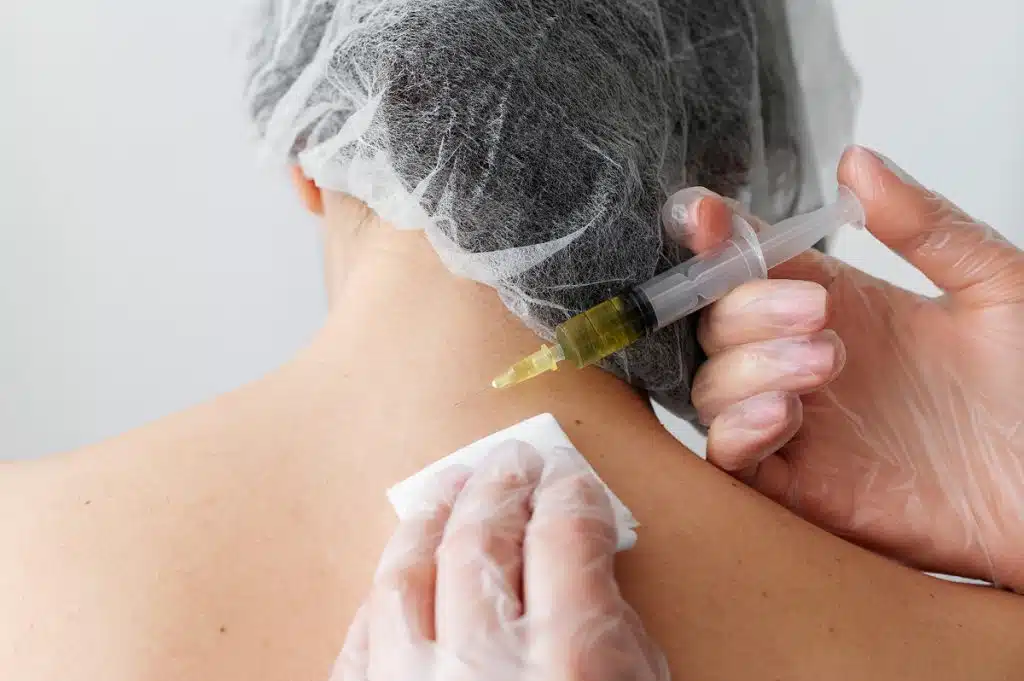
What Is a BMAC Injection?
BMAC stands for Bone Marrow Aspirate Concentrate. It is created by collecting a small amount of bone marrow most commonly from the pelvic bone and processing it to concentrate naturally occurring components such as:
- Mesenchymal stromal cells
- Hematopoietic cells
- Platelets
- Growth factors and signaling proteins
The concentrated material is then injected into a specific joint or soft tissue area under image guidance.
BMAC is considered an orthobiologic treatment. It uses the patient’s own cells and is different from medications, synthetic implants, or donor tissue products.
Conditions We Commonly Evaluate for BMAC
In my Palm Beach practice, BMAC may be discussed as an option for patients with:
- Mild to moderate knee osteoarthritis
- Hip, shoulder, or ankle joint degeneration (early stages)
- Certain cartilage defects
- Chronic tendon conditions that have not responded to conservative care
- Ligament injuries with incomplete healing
BMAC is not appropriate for all orthopedic conditions, and it is not a substitute for surgery when structural damage is advanced.
Highly Experienced & Trained Orthopedic Surgeon
Patient Centered Care You Can Trust
Stem Cell Therapy/OrthoBiologics
Who May Be a Reasonable Candidate
Patients who may be considered for BMAC typically:
- Have persistent symptoms despite physical therapy, activity modification, or injections such as corticosteroid or PRP
- Have imaging that shows early or moderate degeneration, not end‑stage joint collapse
- Are seeking to delay or avoid surgery when medically appropriate
- Are generally healthy enough to undergo a bone marrow aspiration
How the Procedure Is Performed
BMAC is performed as an outpatient procedure:
- Local anesthesia is used to collect bone marrow, usually from the posterior iliac crest.
2. The aspirate is processed on site to concentrate cellular components.
3. The BMAC is injected into the targeted area using ultrasound or fluoroscopic guidance.
Who Is Not a Good Candidate
BMAC is not recommended for patients with:
- Advanced or bone‑on‑bone arthritis
- Severe joint deformity or instability
- Active infection
- Certain blood or bone marrow disorders
- Uncontrolled medical conditions
- Expectations of guaranteed or rapid results
What Patients Say after the injection
Read Transcript
Hi, yes. My name is Vicky Boyd. I was dealing with a right hip problem. I come to Dr. Rishad to have him to replace my right hip. He did the surgery July 15th, and he referred to me to do a PRP with the hip, with the surgery, and it has helped me tremendously. I am already off all devices, able to walk on my own, and now I can live a full life. I am thankful for him for all he has done. He did a phenomenal job, and I will refer this to anyone that is looking for someone to have knees, hip, any surgery done. He is phenomenal. Please go to him. He will take good care of you. Thank you.
Read Transcript
Hi, my name is Stacey, and this is my dad. His right arm was just dwindling away. It was shrinking, and he couldn’t move this right arm at all. We had gone through therapy appointments, several of those, and that didn’t help. And so we came here, and Dr. Al-rashid talked to us about the PRP and to avoid surgery because my dad has issues with his heart as well, so to avoid surgery as well. So he did the PRP. The first round was remarkable because I could see the difference after the first round, and the colors started coming back to his hand and his arm, and he was able to move it. And so I was so amazed. So the second shot, it got better. Third shot, it’s going to get there. This is the third shot. And he could lift his arm up where he could not do that. And you see the colors coming back to his arm. He’s lifting weights at home with the arm to help with the strength. And so this is remarkable, recovery. And so we are really excited about this. Great. Thank.
Expected Recovery and Timeline
Recovery varies depending on the area treated and the individual patient. In general:
Temporary soreness at the harvest or injection site is common
Activity modification is usually recommended for several weeks
Physical therapy may be incorporated
Symptom changes, if they occur, are typically gradual over months
BMAC does not provide immediate pain relief like anesthetic or steroid injections.
Risks, Limitations, and Uncertainties
While BMAC uses a patient’s own tissue, it is still a medical procedure and carries risks, including:
- Pain or bruising at the aspiration site
- Infection (rare)
- Bleeding
- No improvement in symptoms
From a scientific standpoint, it is important to understand that:
- Outcomes vary widely between patients
- Research is ongoing, with mixed results depending on condition and disease severity
- BMAC does not reverse advanced arthritis or regenerate an entirely damaged joint
BMAC Compared With Other Treatment Options
Depending on diagnosis, severity, and patient goals, treatment options may include:

- Activity modification and physical therapy to improve strength, mobility, and joint mechanics
- Oral or topical anti-inflammatory medications when appropriate
- Corticosteroid injections, which may provide temporary symptom relief but do not alter joint structure
- Platelet-rich plasma (PRP), which uses concentrated platelets rather than bone marrow–derived cells
- Bone Marrow Aspirate Concentrate (BMAC) for select patients with early to moderate disease
Expert orthopedic care is just a click away. Book your consultation today.
Considerations for Palm Beach Patients
Many Palm Beach residents lead active lifestyles involving golf, tennis, pickleball, boating, and walking. Treatment decisions should account for:
- Activity level and goals
- Seasonal residency and follow‑up availability
- Long‑term joint health, not short‑term symptom suppression
Local evaluation allows for personalized planning and coordination of care.
Cost of BMAC Injections
BMAC injections start at ($$$) per treatment. Your exact cost depends on the joint being treated, procedure complexity, and findings from your evaluation. Most insurance plans don’t yet cover BMAC, we’ll walk through your full cost and any financing options before you decide to move forward.
- What Patients Say After Their Visit
At Palm Beach Regenerative Orthopedics, we’re dedicated to providing exceptional orthopedic care. If you had a positive experience with our team, we’d greatly appreciate you taking a moment to leave a review. Your feedback helps us improve and guides others in choosing trusted orthopedic care. Thank you for your support!
Physician Perspective
As an orthopedic physician, my responsibility is to guide patients using evidence, experience, and honest discussion. BMAC is one option among many and is never presented as a cure or replacement for sound medical judgment. An in‑person consultation is essential to determine whether this treatment aligns with your condition and goals. -Dr. Mamun Alrashid