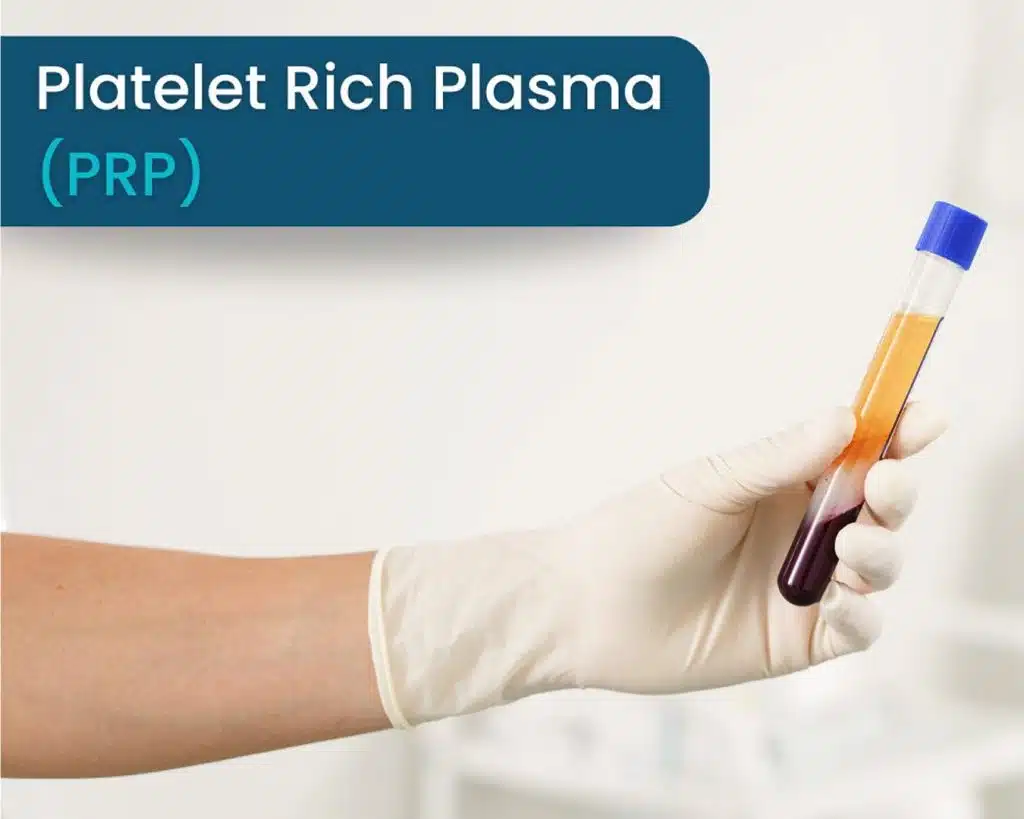
for people dealing with musculoskeletal pain, overuse injuries, tendon problems, and joint conditions that have not improved enough with basic treatment. PRP uses a concentrated portion of your own blood and places it into a targeted area when a physician believes it is appropriate for the diagnosis. That last part matters. PRP is not something to force into every treatment plan. A careful clinic should first decide what is actually causing the pain. If your symptoms point toward a tendon problem, mild to moderate arthritic change, or another condition where platelet rich plasma may reasonably be discussed, then the conversation makes sense. If your pain pattern suggests something else, that should be said clearly too. For people near Captain Armours Way and Coast Guard Way, the local convenience is real. You can come in for an evaluation, ask direct questions, review imaging if needed, and leave with a plan grounded in orthopedic judgment instead of marketing language.
with wear-and-tear knee pain that gets worse after walking or standing. Some have shoulder pain that nags during golf, tennis, lifting, or even reaching into a cabinet. Others are dealing with tendon issues that are not severe enough to feel like a surgical emergency, but persistent enough to drag on for months. PRP is commonly discussed for situations like: – mild to moderate knee osteoarthritis – chronic tendon irritation such as tennis elbow or golfer’s elbow – rotator cuff tendinopathy – partial ligament injuries – chronic Achilles or other tendon pain – soft tissue complaints that have not responded enough to standard conservative care That does not mean everyone near this Jupiter landmark area is automatically a candidate. Full-thickness tears, advanced joint collapse, infection, certain blood-related conditions, and other factors can change the plan. The point of the visit is to understand what fits your body and what does not.
questions. What exactly is causing the pain? Have the right conservative options already been tried? Would imaging help clarify the picture? Does platelet rich plasma actually make sense here, or is another option more appropriate? Palm Beach Regenerative Orthopedics presents regenerative treatments inside the larger context of orthopedic care. That is important because patients do better when the conversation starts with diagnosis instead of a canned sales pitch. If PRP belongs in the plan, you should know why. If it does not, you should still leave with a useful next step.
near Jupiter Inlet Lighthouse & Museum, Jupiter, FL, getting to Palm Beach Regenerative Orthopedics is straightforward. Directions from the targeted location: 1. Start near Captain Armours Way and Coast Guard Way by the Jupiter Inlet Lighthouse area. 2. Head southwest toward South Beach Road and connect back toward central Jupiter. 3. Continue toward the Jupiter Lakes Boulevard area. 4. Arrive at Palm Beach Regenerative Orthopedics, 210 Jupiter Lakes Blvd, Jupiter, FL 33458. Approximate drive time: about 10 to 15 minutes depending on bridge and local traffic Approximate distance: roughly 4 to 5 miles. For patients who already feel slowed down by pain, that kind of short local drive makes follow-up more realistic. It is easier to book the evaluation now instead of putting it off for another month.
Inlet Lighthouse & Museum. That matters because patients on this side of town are not looking for a generic page about care somewhere in Palm Beach County. They want to know whether there is a credible clinic within easy reach from where they actually live, work, or spend time. If you are near the lighthouse, around South Beach Road, or moving through the inlet side of Jupiter, Palm Beach Regenerative Orthopedics is still a practical local option. The office is not sitting across another county or in a part of South Florida that turns one appointment into a day-long errand. It is close enough to work into normal life.
terms. They may just say their knee is getting unreliable. They may say their shoulder keeps catching when they reach overhead. They may say they rested for weeks and the pain came right back once they tried to return to normal activity. That is usually the moment when a proper orthopedic evaluation becomes more valuable than guesswork. One person may come in after trying anti-inflammatory medication and activity changes without enough relief. Another may have already done physical therapy and wants to know whether there is another step before surgery enters the conversation. Another may simply want to hear from a physician who can explain whether PRP is reasonable for the condition they have, not the condition they hope they have. That patient mindset is why this exact local page matters. It connects the real-world pain problem to a real nearby clinic, not just a keyword.
knows when to use it carefully. Palm Beach Regenerative Orthopedics is led by Dr. Mamun Alrashid, a fellowship-trained, board-certified orthopedic surgeon. The practice discusses PRP along with other orthopedic and regenerative options, including bone marrow aspirate concentrate and adipose-derived stem cell therapy when appropriate. For patients, that means the conversation can stay balanced. If PRP makes sense, it can be discussed as one piece of a larger treatment plan. If another path is better, the evaluation can move in that direction instead. That kind of grounded decision-making is what most patients actually want when they are paying for specialty care.


differently. You stop carrying things the usual way. You plan around the shoulder, the knee, or the tendon because it has become part of every decision. If that sounds familiar and you are near Captain Armours Way and Coast Guard Way, close to Jupiter Inlet Lighthouse & Museum in Jupiter, Florida, Palm Beach Regenerative Orthopedics gives you a nearby place to get a real orthopedic opinion. You do not have to decide on PRP before you walk in. You only need to decide that the pain has gone on long enough and it is time to get clarity. From this side of Jupiter, the office is close enough to make that step practical.