
Shoulder pain is one of the most common musculoskeletal problems I evaluate in my Palm Beach practice. Patients range from active adults with rotator cuff injuries to retirees dealing with chronic joint pain from osteoarthritis. Many want relief but hope to avoid surgery if possible.
In appropriate cases, stem cell therapy for injuries / pain can be considered as part of a comprehensive regenerative therapies approach. This page explains what that means medically, including who may benefit, who should not pursue it, and what we still do not know.
Understanding Shoulder Pain
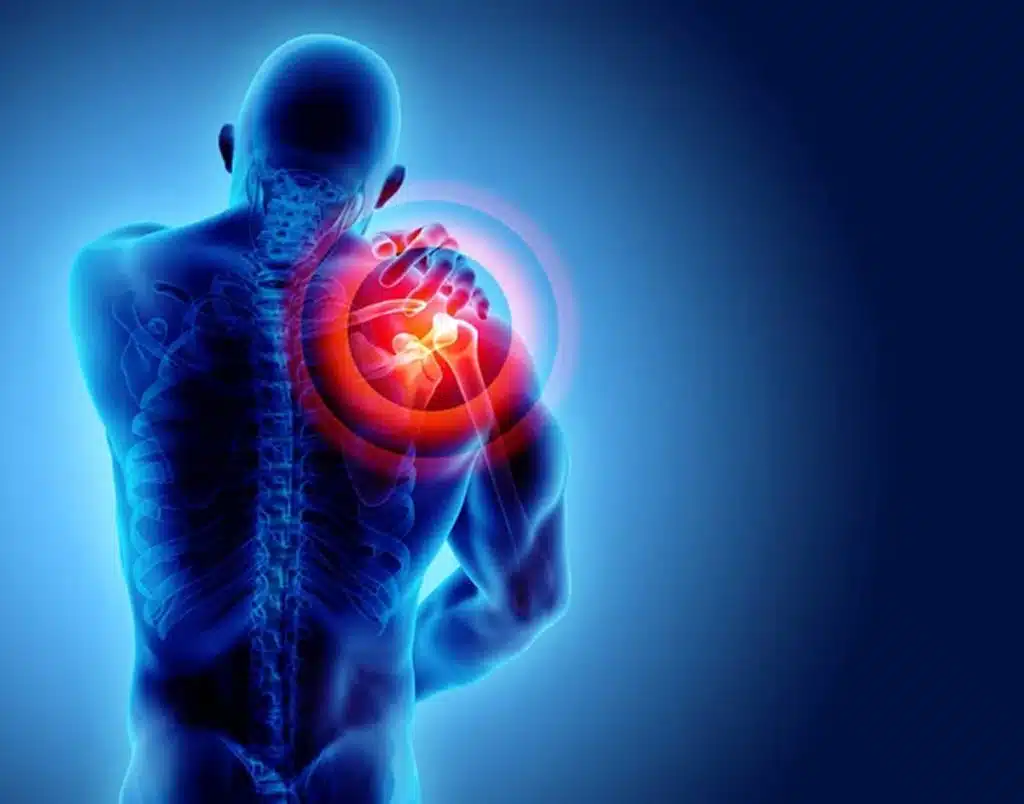
The shoulder is a complex joint involving the humeral head, glenoid, labrum, rotator cuff tendons, cartilage, and surrounding ligaments. Pain may arise from:
- Rotator cuff tears or tendinopathy
- Labral injury
- Glenohumeral osteoarthritis
- Biceps tendon pathology
- Prior orthopedic injury
- Chronic inflammation after trauma
In Palm Beach, I frequently see patients who remain active in golf, tennis, boating, and strength training. Over time, repetitive stress or degeneration can lead to persistent symptoms.
How Does the Treatment Work?
Stem Cells are undifferentiated cells capable of developing into specialized tissue types. In orthopedic care, we typically focus on Mesenchymal Stem Cells (MSCs), adult stem cells commonly derived from bone marrow or adipose (fat) tissue.
Mesenchymal Stem Cells (MSCs) are often described as anti-inflammatory regenerative cells because they:
- Modulate inflammatory signaling
- Recruit other repair cells
- Release growth factors
- Support tissue repair in damaged cartilage, tendon, or ligament
In clinical practice, this treatment falls under Regenerative Medicine / Regenerative Therapies, which aim to support the body’s own healing mechanisms rather than surgically removing or replacing tissue.
Highly Experienced & Trained Orthopedic Surgeon
Patient Centered Care You Can Trust
Stem Cell Therapy/OrthoBiologics
How the Procedure Is Performed
Stem cell procedures for shoulder pain are typically:

- Minimally Invasive Procedures
- Performed in an outpatient setting
- Image-guided (usually ultrasound)
- Completed under local anesthesia
The process generally includes:
- Processing the sample to concentrate Mesenchymal Stem Cells (MSCs)
- Performed in an outpatient setting
- Injecting the concentrate into the targeted shoulder structure
Because this is considered non-surgical pain relief, there are no large incisions and no hardware placement. Most patients return home the same day.
Who May Be a Candidate?
In my experience treating Palm Beach patients, reasonable candidates may include:
- Individuals with mild to moderate shoulder osteoarthritis
- Partial rotator cuff tears
- Chronic tendinopathy not responding to physical therapy
- Patients seeking non-surgical pain relief
- Those medically cleared for a minimally invasive biologic procedure
Ideal candidates understand that this therapy aims to reduce inflammation and support tissue repair not to regrow a completely destroyed joint.
Who Is Not a Good Candidate?
Stem cell therapy is not appropriate for everyone.
It may not be suitable for:
- Complete rotator cuff tears requiring surgical repair
- Advanced, bone-on-bone osteoarthritis
- Shoulder instability requiring reconstruction
- Active infection
- Certain systemic medical conditions
- Patients expecting guaranteed or immediate results
In cases of severe structural damage, shoulder replacement surgery may offer more predictable long-term improvement.
What Patients Say after Therapy
Read Transcript
Speaker 1
My experience with Dr. Al-rashid has been amazing. I’ve had one replacement. I’m going in for my second one. He’s tried different therapeutics to ease my pain and prolong surgery. However, my joint is worn out, so we’re going to do a second surgery, a different approach to fit my body type so that I recover faster. We’re going to try a plasma injection after surgery to provide extra provide extra healing, and hopefully we’ll have a successful surgery.
Speaker 2
And how did you feel with your overall experience of the plasma injections?
Speaker 1
My plasma injections have reduced my pain and inflammation. They prolonged me about 6 months to be able to negotiate work and life to get me to the next point of surgery.
Speaker 2
Awesome. Thank you so much. You’re welcome.
Read Transcript
Hi, my name is Stacey, and this is my dad. His right arm was just dwindling away. It was shrinking, and he couldn’t move this right arm at all. We had gone through therapy appointments, several of those, and that didn’t help. And so we came here, and Dr. Al-rashid talked to us about the PRP and to avoid surgery because my dad has issues with his heart as well, so to avoid surgery as well. So he did the PRP. The first round was remarkable because I could see the difference after the first round, and the colors started coming back to his hand and his arm, and he was able to move it. And so I was so amazed. So the second shot, it got better. Third shot, it’s going to get there. This is the third shot. And he could lift his arm up where he could not do that. And you see the colors coming back to his arm. He’s lifting weights at home with the arm to help with the strength. And so this is remarkable, recovery. And so we are really excited about this. Great. Thank.
Expert orthopedic care is just a click away. Book now.
How Does It Compare to Surgery?

Conservative Care
Before considering stem cell therapy, we typically begin with conservative care, which may include a structured course of physical therapy, activity modification to reduce joint stress, anti-inflammatory medications to manage pain and swelling, and in some cases, corticosteroid injections to help calm inflammation and provide temporary symptom relief.

Stem Cell Therapy
Stem cell therapy is a minimally invasive procedure that does not require hardware or implanted devices and generally carries a lower immediate risk profile than open surgery, with recovery often measured in weeks rather than months; however, outcomes can vary and depend largely on the severity and extent of the underlying joint damage.

Surgery
Surgical procedures such as rotator cuff repair or total shoulder replacement are often more appropriate for patients with full-thickness tendon tears, severe deformity, or advanced joint degeneration. While surgery can provide structural correction, it involves higher risks, longer recovery, and potential complications, and in my Palm Beach orthopedic practice treatment is individualized, with regenerative therapy serving as one option among several rather than a replacement for surgery in all cases.
- What Patients Say After Their Visit
At Palm Beach Regenerative Orthopedics, we’re dedicated to providing exceptional orthopedic care. If you had a positive experience with our team, we’d greatly appreciate you taking a moment to leave a review. Your feedback helps us improve and guides others in choosing trusted orthopedic care. Thank you for your support!
Risks and Limitations
Although generally considered safe when performed appropriately, stem cell procedures are not risk-free.
Potential risks include:
- Infection
- Bleeding
- Pain flare after injection
- Failure to improve symptoms
- Need for later surgical intervention

Additionally, research is ongoing. While early data are encouraging in selected patients, long-term evidence is still evolving. Insurance coverage is often limited because many regenerative therapies are considered investigational.
Patients should approach treatment with realistic expectations.
What Results Can Patients Expect?
Results vary.
Some patients report:
- Gradual reduction in shoulder pain
- Improved function
- Delayed need for surgery
Others experience minimal change.
Improvement, when it occurs, usually develops over several weeks to months as the biologic processes unfold.
There are no guarantees in medicine especially with biologic therapies.
How do I know if I am a candidate?
A full orthopedic evaluation, imaging review, and discussion of your goals are necessary before determining whether regenerative therapy is appropriate.
A Thoughtful Approach for Palm Beach Patients
In Palm Beach, many patients seek options that maintain an active lifestyle while avoiding unnecessary surgery. Regenerative Medicine / Regenerative Therapies, including Stem Cells and particularly Mesenchymal Stem Cells (MSCs) may offer a reasonable option for selected cases of chronic joint pain, shoulder pain, and certain joint injuries.
However, this treatment is not a universal solution. Careful diagnosis, honest discussion of risks, and appropriate expectations are essential.
As a board-certified orthopedic physician, my role is not simply to offer procedures, but to guide patients toward the treatment that best aligns with their condition, medical history, and long-term function.
If you are experiencing persistent shoulder pain in Palm Beach, a thorough orthopedic evaluation is the first and most important step.